

Designing a beautiful kitchen goes far beyond choosing stylish cabinets or high-end appliances. One of the most important elements that shapes the entire atmosphere of the space is the color palette. The right kitchen color scheme can make the room feel welcoming, spacious, modern, or cozy depending on the tones you select.
Whether you prefer bold contemporary contrasts or timeless neutral tones, choosing the right colors can transform an ordinary kitchen into the heart of the home.
In this guide, we’ll explore the most popular kitchen color combinations, trending palettes for 2026, and practical tips for selecting colors that make your kitchen both stylish and functional.
Popular Kitchen Color Schemes
Kitchen design trends evolve every year, but certain color combinations continue to stand out because they balance beauty with practicality. Below are several popular kitchen color schemes that homeowners and designers are embracing.
You can also explore more inspiration by learning about the kitchen colors that help homes sell faster.
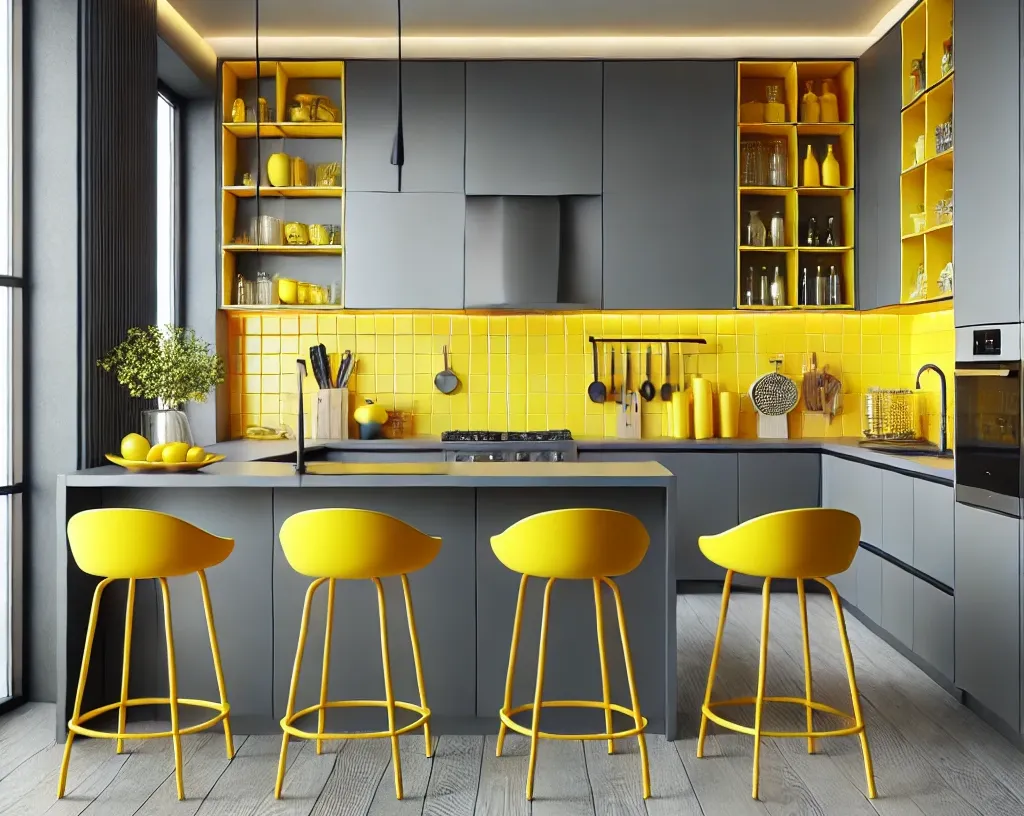
1. Buttery Yellow + Steel Gray + Industrial Metals
This eye-catching palette combines warm buttery yellow with cool steel gray to create a well-balanced and energetic kitchen atmosphere. Yellow introduces warmth and positivity, while gray adds a sleek and sophisticated feel.
Many designers use yellow for cabinets or accent walls, while gray works perfectly for backsplashes, countertops, or kitchen appliances. To enhance the industrial vibe, metallic elements such as brushed steel handles, stainless fixtures, or metal lighting can be incorporated.
The result is a modern kitchen that feels lively without overwhelming the space.
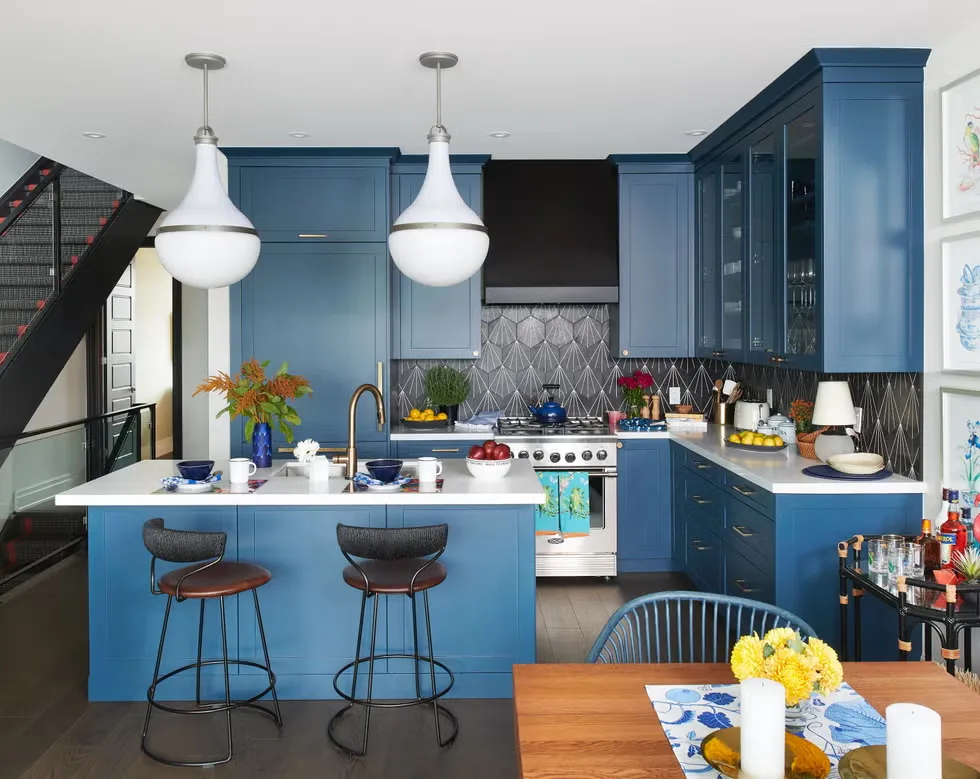
2. Stormy Blue + Earth Brown + Natural Materials
Stormy blue paired with earthy brown creates a calm yet grounded kitchen environment. Deep blue cabinets bring elegance and depth, while warm brown tones—often seen in wood surfaces or concrete countertops—add natural warmth.
This color combination works well in both modern and rustic kitchens. The richness of the tones gives the space character while still maintaining a relaxed and inviting atmosphere.
Natural materials such as wood beams, stone backsplashes, and textured flooring help reinforce the earthy aesthetic.
3. Black + White + Warm Accents
The classic black-and-white kitchen never goes out of style. This timeless pairing offers a clean, contemporary appearance that suits many home styles.
However, to prevent the kitchen from feeling too cold or sterile, designers often introduce warm accents such as wood textures, brass hardware, or warm lighting. These small additions add depth and comfort while maintaining the elegant contrast of black and white.
This versatile color scheme works beautifully in minimalist, modern, and transitional kitchens.

4. Black + White + Red Accent
For homeowners who enjoy bold interiors, adding a splash of red to a black-and-white kitchen can create an energetic focal point.
The black and white foundation provides a structured and balanced background, while red injects vibrancy and personality into the design. Red accents might appear in a kitchen island, backsplash tiles, bar stools, or small decorative accessories.
This combination is particularly effective in modern or retro-inspired kitchens where strong color statements are welcome.

5. Lavender + Cream + Soft Accents
Lavender and cream together create a soft, elegant kitchen ambiance. Lavender introduces a subtle touch of color, while cream tones help keep the room light and spacious.
This palette works especially well in kitchens that blend traditional and modern elements. Soft metallic finishes, vintage wood pieces, or delicate lighting fixtures can further enhance the relaxed yet refined aesthetic.
The result is a kitchen that feels calm, sophisticated, and welcoming.

6. White + Marble + Gold Details
White kitchens continue to be one of the most popular choices among homeowners. They create a bright, open environment and make even small kitchens appear larger.
When paired with luxurious marble countertops and gold hardware, a white kitchen gains an elevated and elegant look. The neutral white background allows the natural patterns in marble to stand out, while gold finishes bring warmth and refinement.
This style works well in both contemporary and classic kitchen designs.

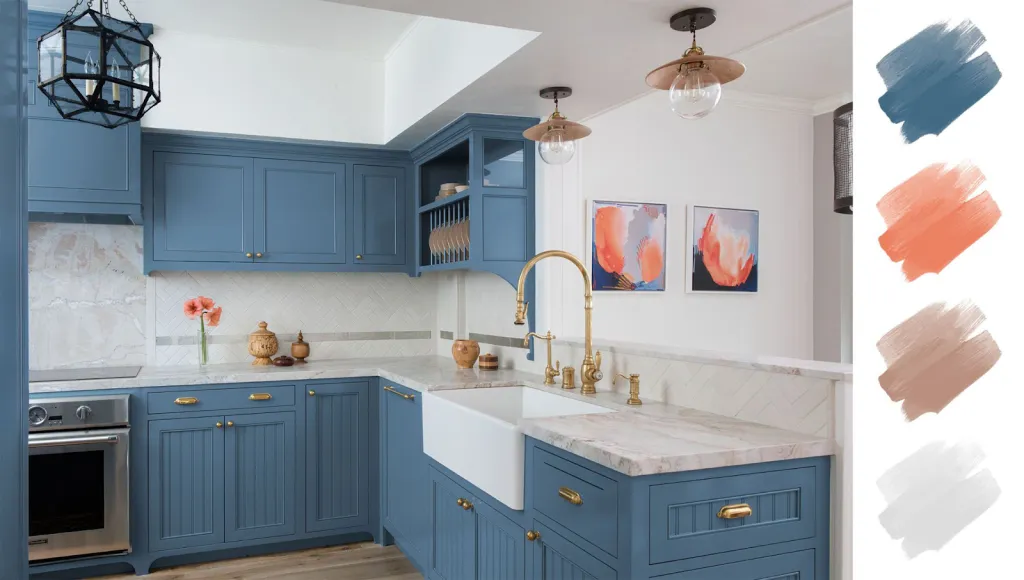
7. Blue + White + Orange Highlights
For a lively and refreshing look, blue and white provide the perfect foundation while orange accents add energy and contrast.
Blue cabinetry creates a cool and calming atmosphere, white surfaces keep the space bright, and small touches of orange introduce a playful burst of color. This palette is especially popular in coastal or beach-inspired kitchens.
Orange bar stools, pendant lights, or decorative pieces can serve as eye-catching highlights within the space.

8. Scandinavian Gray + White + Natural Wood
Inspired by Nordic design principles, this color scheme combines soft gray, clean white, and warm natural wood tones.
Gray adds subtle depth and modern sophistication, while white keeps the kitchen feeling open and uncluttered. Natural wood cabinets, countertops, or flooring introduce warmth and organic texture.
This palette is ideal for modern kitchens where simplicity, functionality, and comfort are equally important.

9. Cherry Wood + Green + Neutral Backsplash
Cherry wood and green create a rich and earthy color combination that works particularly well in spacious kitchens with ample natural light.
The reddish tones of cherry wood cabinets pair beautifully with deep green walls or accents. To balance these bold colors, a neutral backsplash or countertop can soften the look and bring harmony to the design.
This palette adds character and warmth while maintaining a sophisticated atmosphere.

10. Pink + White + Vintage Accents
Soft pink kitchens are making a comeback in modern interior design. When combined with white and vintage details, pink creates a warm, charming, and inviting environment.
Pink cabinets or walls can provide subtle personality, while white surfaces keep the space bright and airy. Vintage elements such as wooden shelves, retro appliances, and classic lighting fixtures enhance the nostalgic appeal.
This color palette is perfect for homeowners who want a kitchen with both personality and warmth.

Choosing the Right Kitchen Color Scheme
Selecting the ideal kitchen color palette depends on several factors, including your personal style, the size of the kitchen, and the overall design of your home. Below are some suggestions for choosing colors that match different kitchen styles.
You can also explore ideas for selecting kitchen cabinets that complement your design.
1. Modern Kitchens
Modern kitchens focus on simplicity, clean lines, and practicality. Neutral tones such as gray, white, black, and deep blue are popular choices.
These colors create a sleek and contemporary atmosphere, especially in open spaces with plenty of natural light. Adding subtle accents or matte finishes can give the kitchen additional visual interest without compromising its minimalist appeal.
2. Traditional Kitchens
Traditional kitchens emphasize warmth, comfort, and timeless beauty. Soft colors like beige, ivory, cream, and warm browns are common choices.
Rich wooden cabinetry pairs well with these tones, creating a cozy and welcoming environment. Decorative elements such as marble backsplashes, molding details, or classic hardware can further enhance the traditional style.
3. Farmhouse Kitchens
Farmhouse kitchens celebrate rustic charm and natural materials. Soft whites, muted greens, and warm earth tones work particularly well in this style.
Wooden elements, open shelving, and vintage fixtures help create a relaxed country atmosphere. Bold accents such as navy blue or matte black can also be added to provide contrast and visual interest.
4. Industrial Kitchens
Industrial kitchens draw inspiration from urban lofts and raw materials. Dark shades such as charcoal gray, deep blue, and matte black dominate the palette.
Exposed brick walls, metal fixtures, and concrete surfaces contribute to the rugged aesthetic. Bright accent colors like red, orange, or yellow can add contrast and prevent the space from feeling too heavy.
5. Bohemian Kitchens
Bohemian kitchens are vibrant, creative, and full of personality. Rich colors such as deep purple, bright orange, and bold red are commonly mixed together.
Natural materials and layered textures—like patterned rugs, mosaic tiles, and vintage décor—help tie the space together. The result is a relaxed and artistic kitchen with a unique character.
Tips for Mixing and Matching Kitchen Colors
Combining colors successfully requires careful balance. A well-planned palette can enhance both the beauty and functionality of your kitchen.
Here are several helpful tips to guide you.
1. Use Contrast to Create Visual Interest
Contrast can add depth and highlight important design elements. Pairing light and dark shades helps certain features stand out.
For example, dark cabinets combined with light countertops can create a striking visual effect. A deep blue kitchen island paired with pale gray surfaces can also establish a strong focal point.
2. Limit Your Palette to Two or Three Colors
Too many colors can make a kitchen feel cluttered or chaotic. Instead, stick to two or three main colors that work well together.
You might choose one color for cabinetry, another for walls, and a third accent color for accessories. For instance, gray cabinets, white walls, and yellow decorative accents can produce a clean yet lively design.
3. Balance Style With Practicality
While aesthetics are important, your color choices should also work well with other kitchen elements such as flooring, countertops, and appliances.
Dark surfaces paired with other dark elements may make the room feel heavy. Introducing lighter tones can balance the design and maintain visual harmony.
4. Consider Your Kitchen Lighting
Lighting greatly affects how colors appear in a space. Natural daylight and artificial lighting can alter the perception of certain shades.
Before making a final decision, test your chosen colors under the lighting conditions in your kitchen to ensure they achieve the desired effect.
5. Prioritize Durability and Maintenance
Practicality is just as important as style. Kitchens are high-traffic areas, so choose colors and finishes that are easy to maintain.
For example, lighter countertops may hide dust and stains better than darker ones. Durable finishes can also help your kitchen maintain its appearance over time.
Common Mistakes to Avoid
Choosing a kitchen color scheme can be exciting, but certain mistakes can negatively affect the final result. Avoiding these common errors will help ensure a more successful design.
Using Too Many Bold Colors
Bold colors can add personality to a kitchen, but overusing them may create a chaotic appearance.
Instead, apply strong colors in small doses—such as backsplashes, decorative accessories, or kitchen islands—while keeping the main palette neutral.
Ignoring Kitchen Functionality
A kitchen must perform well in daily life. Selecting colors without considering durability or maintenance can lead to long-term issues.
For instance, extremely dark countertops may show scratches, dust, or fingerprints more easily in busy kitchens.
Overlooking the Role of Lighting
Lighting plays a critical role in how colors appear. A color that looks perfect in a showroom may appear very different under your home’s lighting conditions.
Testing samples in your kitchen before committing can prevent costly mistakes.
Forgetting the Size of Your Kitchen
The dimensions of your kitchen should influence your color choices.
Lighter shades help small kitchens feel more open and spacious, while darker colors can create a cozy atmosphere in larger kitchens.
Ignoring the Flow of Adjacent Rooms
In open-concept homes, the kitchen often connects to the living or dining areas. Choosing colors that complement nearby spaces will help create a harmonious overall design.
A consistent palette across rooms ensures the home feels cohesive and well balanced.
Conclusion
Creating the perfect kitchen color scheme requires balancing style, personal preference, and practicality. The right combination of colors can transform your kitchen into a space that is not only visually appealing but also comfortable and functional.
Don’t be afraid to experiment with different palettes until you find the one that best reflects your taste and lifestyle.
If you’re planning a kitchen renovation or a full home upgrade, Hanse offers professional solutions for customized home interiors. With thoughtful design and high-quality craftsmanship, Hanse can help you build a kitchen that truly stands out in both beauty and functionality.
